Ask a new reseller where they source inventory and you'll hear "thrift stores." Ask a full-time seller doing six figures and you'll get a very different answer. Not because thrifting doesn't work, but because it doesn't scale.
The resellers who build sustainable businesses don't rely on a single sourcing channel. They build a sourcing funnel, a diversified system of inventory sources that balances cost, volume, consistency, and profit margins. When one channel dries up, the others keep the pipeline flowing.
Here's a real look at where full-time resellers are actually finding inventory in 2026, what each channel costs, and how to build a sourcing system that grows with your business.
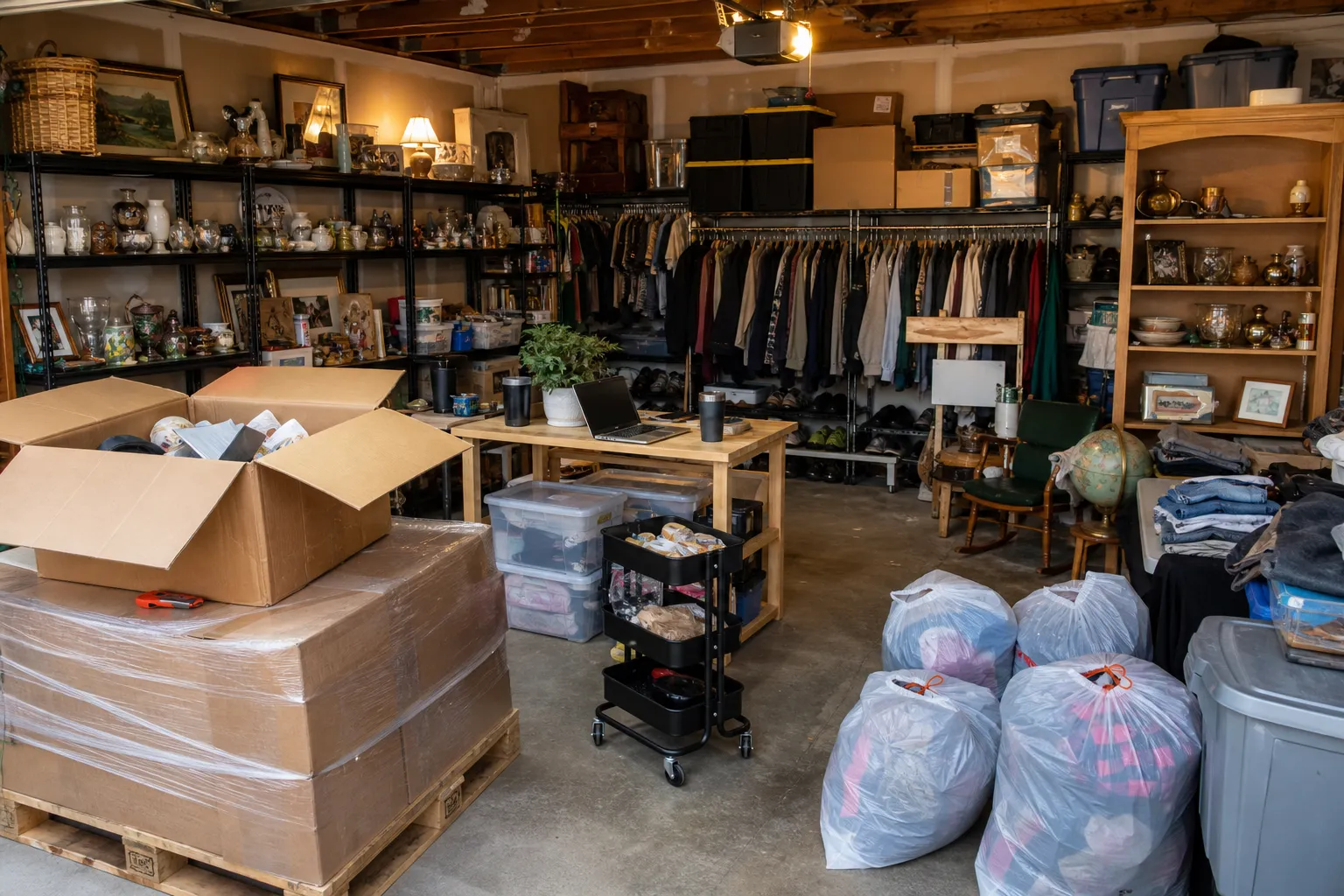
The Sourcing Landscape: A Quick Map
Before diving into each channel, here's how the major sourcing methods stack up:
| Source | Avg Cost per Item | Typical Margin | Volume | Consistency | Best For |
|---|---|---|---|---|---|
| Thrift Stores | $2 to $8 | 60 to 80% | Low | Unpredictable | Fashion, vintage, books |
| Estate Sales | $1 to $20 | 50 to 75% | Medium | Seasonal | Vintage, collectibles, tools |
| Garage Sales | $0.50 to $5 | 70 to 90% | Low | Seasonal | Miscellaneous, toys, media |
| Liquidation Pallets | $3 to $10/unit | 25 to 45% | High | Consistent | Electronics, home goods |
| Retail Arbitrage | $5 to $30 | 20 to 40% | Medium | Consistent | New in box, clearance |
| Online Arbitrage | $10 to $50 | 15 to 35% | High | Consistent | New products, books |
| Wholesale | $5 to $25 | 20 to 35% | Very High | Very Consistent | Specific categories |
| Local Pickups (FB/CL) | $1 to $15 | 50 to 70% | Medium | Moderate | Furniture, electronics, lots |
No single row in that table is "the best." Each has tradeoffs, and the right mix depends on your goals, your storage space, and how much time you can invest.
Thrift Stores: The Training Ground
Every reseller starts here, and for good reason. Thrift stores offer low risk, high margins, and an incredible education in what sells. You learn to recognize brands, spot quality, and develop the eye that separates profitable picks from shelf-sitters.
What works in 2026: Focus on categories where knowledge creates an edge. Fashion (especially vintage and brand-name), hardcover non-fiction, cast iron cookware, vintage Pyrex, quality tools, and anything with a cult collector following.
The ceiling: Thrift stores are time-intensive and unpredictable. You might walk through Goodwill for an hour and find nothing, or you might find a $200 item for $4. You can't build a business plan around randomness.
Scaling tip: Build relationships with your local stores. Learn their restock schedules. Some sellers negotiate to get first access to new donations or buy specific categories in bulk from the back. It doesn't always work, but it costs nothing to ask.
Realistic numbers: A good thrift run yields 5 to 15 sellable items per hour of shopping. At an average acquisition cost of $4 and an average sale price of $25, that's $100 to $300 in potential revenue per hour invested in sourcing. Not bad, but hard to scale past a certain volume.
Estate Sales: The Hidden Goldmine
If thrift stores are the training ground, estate sales are where you graduate. The inventory quality is often dramatically better, the pricing can be extremely favorable (especially on day 2 or 3 of a multi-day sale), and you can sometimes buy entire categories in bulk.
Why they're valuable: Estate sales typically feature items from one household, often accumulated over decades. You'll find vintage items, antiques, specialized tools, and collectibles that never make it to thrift stores because estate sale companies handle the liquidation directly.
How to find them: EstateSales.net and EstateSales.org are the standard directories. Set up alerts for your area. Many sale companies also post on Facebook and local community boards.
The strategy: Preview the sale online (most post photos), identify the high-value lots, and arrive early for anything competitive. On the last day, negotiate aggressively. Estate sale companies would rather sell at 50% off than pack things up.
Seasonal patterns: Spring through fall is peak season for estate sales. Winter slows down considerably in most regions. Plan your inventory accordingly: stock up in summer for the Q4 selling season.
Garage and Yard Sales: Low Cost, High Hustle
Garage sales are the most labor-intensive sourcing channel but also the cheapest. Items are priced to sell, not to maximize value, because the sellers want the stuff gone.
The modern approach: Use Facebook Marketplace, Craigslist, and local community groups to find sales in advance. Map out a route the night before. Arrive at the best-looking sales first thing in the morning.
What to buy: Focus on items that are underpriced relative to their eBay value. Electronics, video games, brand-name clothing, quality tools, and vintage anything are reliable categories. Skip items that are heavy, fragile, or hard to ship unless the margin is exceptional.
Bundle opportunities: Garage sale sellers are often willing to cut deals on multiple items. "Would you take $20 for all of these?" works more often than you'd think, especially later in the day.
Time investment: Expect to spend 3 to 5 hours for a Saturday morning garage sale circuit. In a good market, you'll come back with 20 to 40 items at an average cost under $2 each.
Liquidation Pallets: Volume at a Price
This is where casual reselling starts to look like a real business. Liquidation companies sell pallets of returned, overstock, or shelf-pull merchandise from major retailers. You're buying in bulk, sometimes hundreds of units at once.
The reality check: Liquidation is not the "buy a mystery pallet and find treasure" fantasy that YouTube promotes. A recent comparison showed manifested apparel pallets averaging about 35% margins with a 28% defect rate, while thrift sourcing delivered 70% margins with almost no defect risk. The tradeoff is volume and consistency.
Key platforms in 2026:
- B-Stock (direct from retailers like Target, Amazon, Walmart)
- Liquidation.com (wide variety, auction format)
- DirectLiquidation (electronics-heavy)
- BULQ (curated lots, higher prices but better quality)
What to watch for:
- Manifested vs. unmanifested pallets. Manifested pallets come with an itemized list. Always buy manifested when possible. Unmanifested is gambling.
- Condition categories matter. "Shelf pulls" and "overstock" are dramatically better than "customer returns" or "salvage."
- Shipping costs add up. A $200 pallet with $150 in freight costs changes your math entirely. Look for local pickup options.
Best for: Sellers who have storage space, don't mind processing volume, and want predictable inventory flow. Electronics, home goods, and tools tend to perform best.
Retail Arbitrage: Clearance Hunting
Retail arbitrage means buying discounted products from retail stores and reselling them at market price online. It's been around for years, but the tools have gotten dramatically better.
How it works in 2026: Scanning apps compare in-store clearance prices with online sold data in real time. Walk through the clearance section at Target, Walmart, or TJ Maxx, scan barcodes, and the app tells you the potential profit before you buy.
Categories that work: Toys (especially before Q4), health and beauty products, small kitchen appliances, seasonal items on deep clearance, and LEGO sets are consistently profitable.
The challenges: Margins are thinner than thrifting (20 to 40% vs 60 to 80%), some brands restrict reselling on Amazon, and you're competing with other arbitrage sellers who have the same tools.
Scaling tip: Build relationships with store managers and ask about upcoming markdowns. Some stores will let you buy entire clearance endcaps at an additional discount.
Online Arbitrage: Scale From Your Couch
Online arbitrage applies the same concept as retail arbitrage but uses online deals instead of in-store clearance. You're buying from one online retailer at a discount and selling on another platform at full price.
Tools of the trade: Keepa (Amazon price history), Tactical Arbitrage (automated deal scanning), and various deal-alert communities on Discord and Telegram.
Why it works for scaling: Unlike thrifting or garage sales, online arbitrage doesn't require you to physically go anywhere. You can source at midnight in your pajamas. This makes it highly scalable for sellers who want to grow without proportionally increasing their driving time.
The risk: Online arbitrage depends on finding pricing inefficiencies, and those windows close fast. You're also dealing with longer shipping times (product to you, then you to customer) and potential issues with product authentication on certain platforms.
Wholesale: The Boring Scaling Play
Wholesale is the least exciting sourcing method and the most scalable. You establish a direct relationship with a manufacturer or distributor, buy in bulk at wholesale pricing, and sell at retail.
Getting started: Most wholesalers require a business license and a resale certificate. Start small by reaching out to brands you already sell successfully on eBay or Amazon. Many will offer wholesale terms to sellers who can demonstrate consistent sales volume.
Advantages: Predictable cost, predictable supply, no sourcing time. You know exactly what you're getting and exactly what your margins will be.
Disadvantages: Higher upfront investment, potential minimum order quantities, and the need to manage larger inventory. This isn't where you start. It's where you graduate to when you've identified categories that consistently sell.
Local Marketplace Deals: The Underrated Channel
Facebook Marketplace, Craigslist, OfferUp, and Nextdoor are sourcing channels that many resellers overlook. People post items here that they want gone, often at prices well below resale value.
What to look for: "Moving sale" posts, people clearing out garages or storage units, and any listing where the seller seems motivated. The best deals come from people who value their time over maximum dollar recovery.
A proactive approach: Post "ISO" (in search of) listings for categories you specialize in. "Looking to buy vintage tools, old electronics, or sports memorabilia. Will pick up today and pay cash." You'd be surprised how many people reach out.
Building a referral network: Tell friends, family, and neighbors what you buy. Over time, people start calling you before they have a garage sale or clean out a deceased relative's home. This is free, exclusive sourcing that no competitor can access.
Building Your Sourcing Funnel
The goal isn't to use every channel. It's to have 2 to 3 primary sources that cover your volume needs and 1 to 2 secondary sources for opportunistic buying.
For part-time sellers (10 to 15 hours/week):
- Primary: Thrift stores + garage/estate sales
- Secondary: Local marketplace deals
- Estimated monthly inventory: 50 to 150 items
For full-time sellers (30 to 40 hours/week):
- Primary: Estate sales + liquidation + one of (retail arbitrage or online arbitrage)
- Secondary: Thrift stores + local marketplace
- Estimated monthly inventory: 200 to 600 items
For scaling to six figures:
- Primary: Wholesale + liquidation
- Secondary: Online arbitrage + estate sales for high-margin pieces
- Estimated monthly inventory: 500 to 2000+ items
The mix shifts as you grow. Early on, you're optimizing for margin per item (thrifting wins). Later, you're optimizing for profit per hour of your time (wholesale and liquidation win because the sourcing decision is simpler).
Seasonal Sourcing Strategy
Your sourcing intensity should match the selling calendar:
January through March: Slow selling season. Focus on sourcing basics and building inventory. Liquidation pallets are often cheaper as retailers dump post-holiday returns.
April through June: Estate sales and garage sales ramp up. This is your best window for vintage, collectibles, and one-of-a-kind inventory. Source aggressively.
July through September: Keep building. Summer clearance at retail stores creates arbitrage opportunities. Start acquiring Q4 inventory (toys, holiday items, gift-worthy products).
October through December: Sell, sell, sell. Reduce sourcing time and maximize listing and shipping time. Your summer and fall inventory should be carrying you through the busiest selling season of the year.
The Real Secret
The resellers who make this a sustainable income don't just know where to source. They know their numbers. Track your cost per item, your average sale price, your sell-through rate, and your profit per hour for each sourcing channel. Over time, the data will tell you exactly where to spend your time.
Sourcing is the engine of a reselling business. Build the funnel, diversify your channels, and keep feeding the machine.
How ListForge Removes the Listing Bottleneck
Here's the dirty secret of the sourcing funnel: most resellers don't have a sourcing problem. They have a listing problem.
You find great inventory, bring it home, and then it sits in a pile because listing takes forever. The death pile grows, cash stays locked up in unsold inventory, and you stop sourcing because what's the point of buying more when you can't list what you already have.
ListForge was built specifically to break that cycle:
- Capture on your phone, right at the source. The ListForge mobile app has a built-in camera with barcode scanning. At a garage sale, you can snap photos and scan barcodes right there. The app uploads everything and AI starts processing immediately. By the time you get home, your items are already identified, priced, and waiting for your review.
- Research that replaces hours of manual work. For each item, ListForge automatically identifies the product from your photos, reads brand marks and label text, searches across marketplaces for pricing data, and checks its memory for items it's seen before. All of this happens in the background while you keep sourcing.
- Complete listings, not just descriptions. ListForge builds every part of the listing: an eBay-optimized title, a full structured description, detailed condition notes, every required item specific, the right leaf category, and shipping configuration. Not one generic AI prompt. A complete, publication-ready listing from your photos.
- Market-anchored pricing so you know your margins. Every price suggestion is anchored to real sold data and market evidence. You can see the actual comps and the price range, so you know exactly what your margin will be before you approve. If ListForge can't find enough evidence to price confidently, it tells you rather than guessing.
- You're always in control. Every listing goes through a review step before anything gets published. You see the full listing preview, edit whatever you want, and approve when you're ready. ListForge does the mechanical work; you make the final call.
The difference this makes to the sourcing funnel is simple math. If listing used to take 10 minutes per item and now takes 30 seconds of review time, you can list a 30-item garage sale haul in 15 minutes instead of 5 hours. That means faster cash flow, a smaller death pile, and the freedom to source more aggressively.
Try ListForge free and turn your sourcing hauls into live listings the same day.